
Career situations
Nursing resume in Australia
Build your nursing resume around the advertised clinical setting, truthful credential status and specific evidence of your contribution.
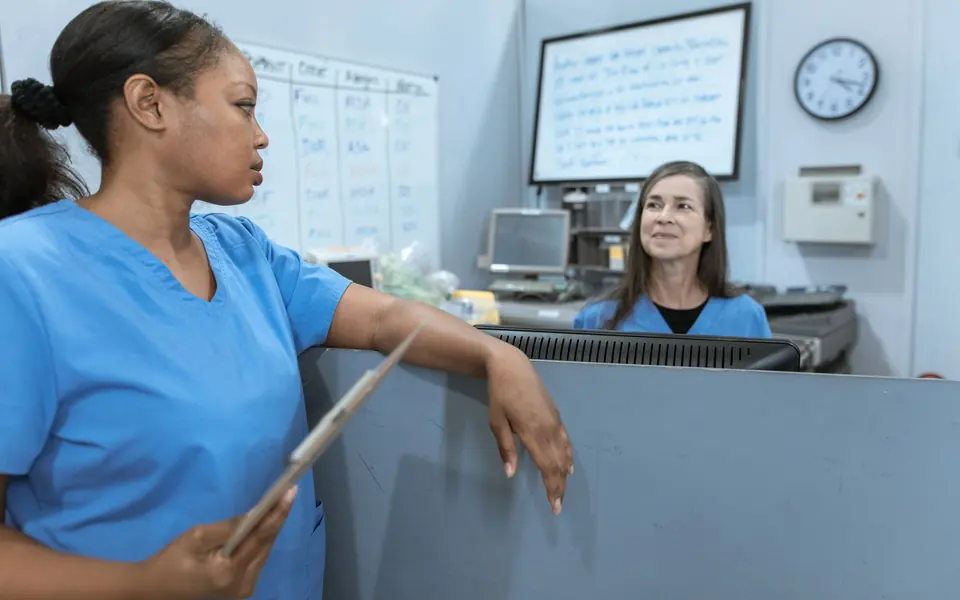
A nursing resume should make your clinical context, current credential status and contribution to patient care easy to understand. Choose evidence for the advertised specialty and level, and separate supervised placements from employed practice. The resume supports an application; it does not replace the employer’s credential verification or requested assessment documents.
Read the health service’s application instructions
Start with the role description and the employer’s recruitment page. Note the specialty, location, roster expectations, selection questions and documents requested. Keep a short requirement-to-evidence list so the opening summary and recent experience address the same job.
Northern Sydney Local Health District’s recruitment guidance describes uploading relevant qualifications and, where applicable, registration and screening documents. Its process is an employer example, not a universal checklist for every Australian nursing role. NSW Health’s Stepping Up application guidance also explains checking essential requirements in the role description.
Structure the clinical evidence
| Section | Useful content | Avoid |
|---|---|---|
| Summary | Career stage, actual clinical setting and target specialty | Claiming expertise without supporting experience |
| Registration and credentials | Truthful current category, status and requested details | Presenting a pending application as approval |
| Clinical employment | Setting, dates, responsibilities and contribution | Identifiable patient details |
| Placements | Ward or service type, duration and supervised work | Implying independent practice |
| Education and development | Completed qualifications and relevant current training | Treating attendance as demonstrated competence |
| Referees | People able to discuss the relevant work | Sharing contact details without permission |
Use the Australian resume structure as a starting point and follow any explicit page limit. Keep the specialty evidence above unrelated early work when it is the clearest match for the role.
Describe AHPRA/NMBA status accurately
Create a clearly labelled registration section using your current details. If the employer requests a registration number, provide the accurate number in its designated form or document. Check the spelling of your name and status against your own current record before submitting.
Do not include a guessed approval date, silently omit a relevant condition or call an application “registered”. Keep any requested evidence ready for the employer’s verification process. Check current regulator instructions for registration eligibility, and follow the employer’s requested format for the application.
The practical editing decision is simple: state what is true now and follow the employer’s instructions about identifiers. Ask the recruitment contact if the required format is unclear. Avoid sending identity or health documents through a channel that the employer has not requested.
Make clinical scope clear
A specialty heading needs supporting detail. Describe the service setting, the work you performed within your role and the colleagues with whom you coordinated care. Use careful verbs: observed, assisted, completed under supervision, coordinated or led, according to what actually happened.
A statement such as “excellent patient care” is difficult to assess. A specific account of documenting observations, escalating a concern through the agreed process or improving a handover is more useful. Do not turn a resume into clinical advice, imply authority you did not hold or include a patient’s identifying history.
Fictional worked example: a graduate placement
Fictional example: Casey Example completed a supervised placement on a general medical ward at Fictional River Hospital. The person, hospital, numbers and events below are invented.
The weak version says: “Responsible for patients and medication.” It hides the supervision and leaves the scope unclear.
A more precise version says: “Prepared structured handovers for assigned patients under the supervising nurse’s review, checking outstanding observations and follow-up actions before the shift change.” Another bullet might read: “Raised an incomplete documentation item with the supervising nurse and updated the record after clarification.”
The improvement comes from context and a clear action, not a dramatic numerical claim. For your own application, explain the result you genuinely observed and be ready to discuss how you worked within supervision and local procedure.
Adapt for experience and specialty
For a graduate role, include placements, relevant study and transferable work that demonstrates communication or reliability. Record the setting and supervision so the reader can judge the evidence fairly.
For an experienced role, give recent specialty experience more space. Explain the work and responsibilities you owned rather than filling the skills section with every clinical term you recognise. For a senior position, add coordination, improvement work, teaching or leadership only where you can explain your contribution and its limits.
Review requested checks separately from the experience section. The NSLHD page lists documents that may be required for its process; it does not mean every check applies to every position. If written responses are requested, prepare them using the selection-criteria guide, with the same facts and dates as your resume.
Questions about nursing resumes
Should clinical placements be listed separately?
Yes, when that makes supervision and career stage clearer. Name the service setting and describe the work you actually completed without implying independent practice.
Must my registration number be on every resume?
Follow the employer’s requested format and provide accurate details where asked. Clarify the preferred channel for identifiers with the recruitment contact.
Can I include a patient story?
Use an anonymised account of your own work without identifiable clinical details. Focus on your action, communication and scope rather than a patient’s private history.
What makes a specialty claim convincing?
Relevant recent work with a clear setting, responsibilities and examples you can discuss. A keyword list alone does not demonstrate specialty experience.
Sources and review
Official pages checked 17 October 2026: NSLHD recruitment and NSW Health application guidance.
OfferUnderway
Tailor your experience to the actual role
Bring your own career evidence and a real job ad. Review every claim, credential and date before submitting.
Build a tailored resume